
Mold Inspection
Visual checks and moisture readings are used during a mold inspection to find mold and determine what is allowing it to grow.
See mold inspectionGet a home mold test tied to a clear decision in Atwater Village. Start with moisture and use targeted samples when useful.
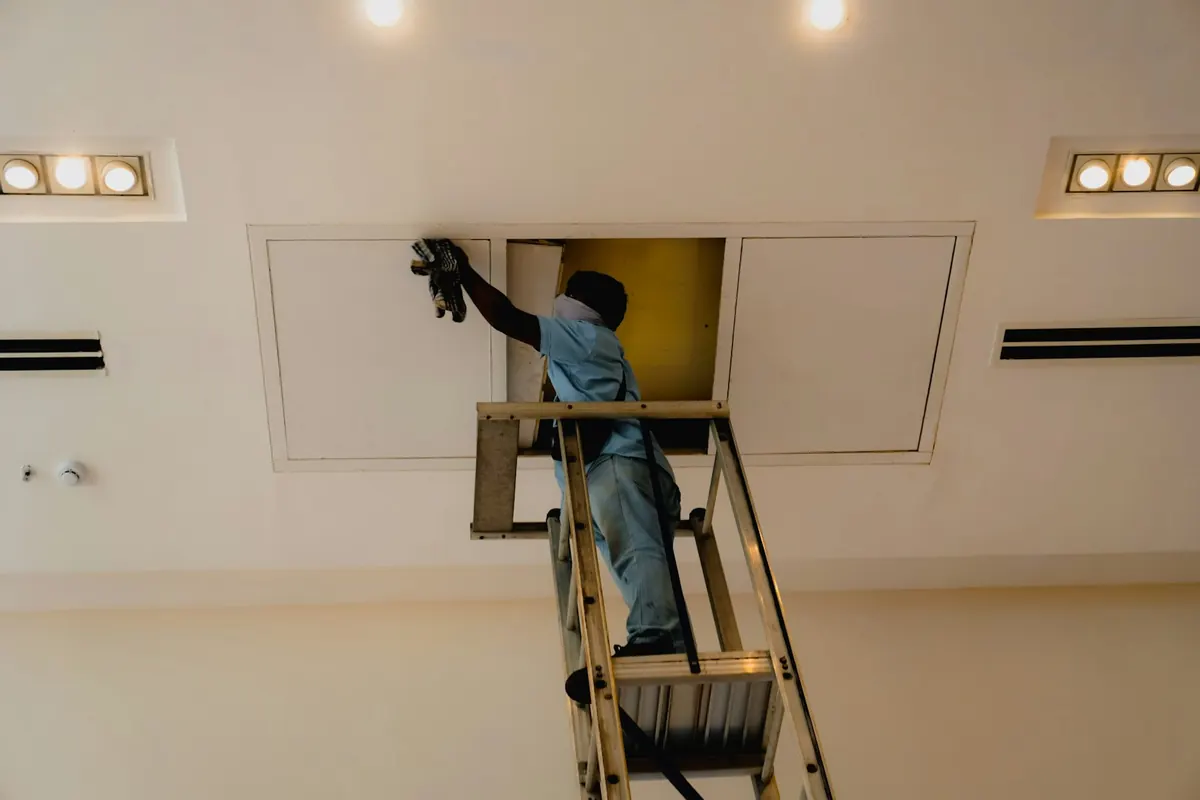
Purposeful sampling works with inspection and moisture mapping to shape the plan.
Your mold tester examines materials and searches for odor, growth and water damage. Damp locations are recorded with a moisture meter. A thermal imaging camera guides checks but cannot identify mold.
In mold air testing, an indoor reading may be compared with an outdoor baseline. A pump with a spore trap captures air, while a swab or tape lift gathers surface material. The findings are limited to those samples. They do not represent every cavity or assess personal health risk.

Ask about tracing the source and using the findings to plan removal.
The plan should state what each sample answers and where its limits lie.
The report should set out containment, removal, drying, cleaning and repair.
Choose an independent assessor to conduct post-remediation verification.
Use sampling only where the finding might change the scope.
Begin with moisture. Use an air test for added context when the source is hidden, not to locate growth within a wall.
The whole home is not represented by a tape lift or swab taken from one location. Moisture correction and cleanup remain necessary for visible growth.
Porous materials may become wet after leaks. To prevent mold growth, dry water-damaged items and areas within 24 to 48 hours. Do not wait for results to stop water.
Have an independent assessor verify that the area is dry and clean, rather than the removal company.
Safely control the water source without disturbing mold.
Call (844) 352-3560Testing only has an overall Fixr figure of $50 to $700 with a mold air test listed at $500 to $700 and $150 to $200 assigned to air and surface samples in a stain test. Fixr puts an HVAC mold test at $50 to $75 according to its published figures. This is not a quote.
These ranges come from published national cost guides, not from a site visit. Your property price is set after an on-site assessment and should be explained before work starts.
Ask about cost: (844) 352-3560A policy-covered sudden water event may be eligible for coverage. Any mold sublimit and the remaining policy terms govern payment.
California's Toxic Mold Protection Act includes a landlord written-disclosure section (Health and Safety Code 26147). By its own wording it applies only after the state adopts mold exposure standards, and the state health department has said it could not set them. Keep reports, moisture readings and repair documents.
Under California's housing law, visible mold found by a health officer or code enforcement officer can make a rental substandard. Renters can contact their local health or code enforcement department to ask for an inspection. Retain messages about leaks and repairs, along with dated photos.
A burst pipe can be treated differently under a policy from maintenance neglect or a gradual leak.
Report damage promptly. Ask which records are needed and whether sampling, inspection and removal are eligible.
The sequence moves from an inspection through targeted sampling to reporting.
After examining porous materials and looking for water intrusion, odor and growth, the assessor notes moisture readings.
Take an indoor sample only for a specific question. An outdoor air sample can supply a baseline.
Use a calibrated pump to move air through the spore trap. Document the sampling location and its room conditions.
Surface sampling collects one selected spot, not the entire building.
Lab results may list mold types or a spore count, depending on the method.
A written scope of work may set the materials, containment and moisture repair needed in the mold removal process.
An independent assessor evaluates the area before repair work, following air movers, drying and HEPA vacuum work.

Call any hour. A mold testing specialist answers, talks through what you are seeing and explains the next steps.
Correct moisture and control removal because sample results replace neither.
Sewage or contaminated water calls for experienced help. Safe removal should proceed without a sampling delay.
Drywall removal may release particles nearby. Dust control can include negative air pressure, a HEPA air scrubber, poly sheeting and a containment barrier.
Mold can trigger allergy and asthma symptoms in some people. People who have asthma, weak immune systems or lung disease face more risk. Lab results do not establish an individual's condition.
Can you clean it yourself? An area under about 10 square feet can often be cleaned by the homeowner after water correction, according to EPA. Get professional help for contaminated water, larger areas or HVAC involvement.
Timing changes based on laboratory scheduling, sample count, access and property size. Start drying and leak control promptly.
A musty odor can suggest damp material, yet indoor air quality testing may fail to find the location. Before taking samples, examine visible materials and check for moisture.
EPA guidance puts indoor humidity below 60 percent, and the ideal level is between 30 and 50 percent. Repair the leak because a dehumidifier cannot take its place.
California has no state license or certification for mold assessors or remediators, according to the California Department of Public Health. General construction work above a small dollar amount does need a license from the Contractors State License Board (CSLB), so it is worth checking a contractor's license there and asking about their mold training. Ask whether rules separate assessment from remediation.
Dry water-damaged areas and items within 24 to 48 hours to prevent mold growth. Fix your moisture source before rebuilding.
Indoor mold levels do not have a federal limit. Interpret spore counts alongside the sampling method, moisture and inspection findings.
The California Department of Public Health (CDPH) Air Quality Section publishes mold and dampness guidance and a mold FAQ. CDPH says visible mold, dampness, and mold odor are unhealthy and should be fixed, and that routine mold testing is not needed when mold is visible. Find out which property, removal or assessment rules are relevant.
The full mold testing guide covers what is cleaned or removed, odor and air quality work, and the rules that apply in California.
Read the full mold testing guide
Property access, local housing conditions and humidity may affect how you plan mold cleanup, containment and moisture control.
The practical local focus for Atwater Village is the individual structure, since mold returns when the underlying plumbing, roofing, drainage, or ventilation problem remains.
Visible mold shows where to begin, but a musty odor or damp material in the next room can point to growth hidden behind finished surfaces.
There is no federal limit for mold levels indoors, so inspection findings should be interpreted with the moisture source and actual building damage.
You can ask about mold cleanup in nearby communities and ZIP codes during the call.
Visual checks and moisture readings are used during a mold inspection to find mold and determine what is allowing it to grow.
See mold inspection
Mold clearance testing is a check after removal, with air samples and a visual check, to confirm the area is clean.
See mold clearance testing
This service pairs a mold inspection with removal, so the crew finds where mold is growing and then cleans it out.
See mold inspection and removal
Containing mold growth comes first in mold remediation, followed by removal, cleaning and correction of the moisture problem that allowed it.
See mold remediation
During mold cleanup, affected surfaces and materials are cleaned, damaged items are bagged and the area is made ready for repairs.
See mold cleanup
Hidden mold remediation locates and clears hidden mold behind wall surfaces, beneath flooring and over ceilings where it is out of view.
See hidden mold remediation (behind walls)
Water damage mold cleanup includes clearing growth caused by a flood or leak and drying the affected structure against a return.
See water damage mold cleanup
Learn how mold removal cost is shaped by factors including affected-area size, the materials present and repairs that may be necessary.
See mold removal costYour assessor first completes a visual inspection, checks water history and takes moisture readings. If a sample addresses a specific question, air can pass through a spore trap or surface material can be lifted. The findings need to inform moisture correction, removal and containment instead of being viewed alone.
No. People search for toxic mold and black mold, but appearance does not establish how risky growth may be. A laboratory may identify sampled material, but cannot determine its health effects. Your focus should be safe cleanup, moisture and affected materials.
Not always. When the moisture source is known and growth is visible, removal can often proceed without identifying the mold type. Sampling has more value when the affected area is uncertain, growth could be hidden, documentation is required or findings may alter the remediation protocol.
What a sample captures at a specific place and time can be described when collection is done properly. A sample cannot show that all cavities are clear or forecast how someone will respond. Its value depends on the plan, equipment, conditions, lab method and interpretation with visible evidence and moisture readings.
For testing alone, Fixr reports a total range of $50 to $700 overall. Cost varies according to access, laboratory timing, the number and type of samples, and reporting detail. Confirm that the scope covers inspection, interpretation and a written report, then ask what each sample can reveal.
Schedule post-remediation verification once removal, cleaning and drying are done, and before dismantling containment or concealing the space with repairs. Use an independent assessor for visual checks, moisture checks and any samples in the plan. The area should remain open until the moisture source is fixed.
Get calm, practical guidance about mold testing, with calls answered 24 hours a day.